Most Valuable Corelle Patterns (Identification & Value, 2026)
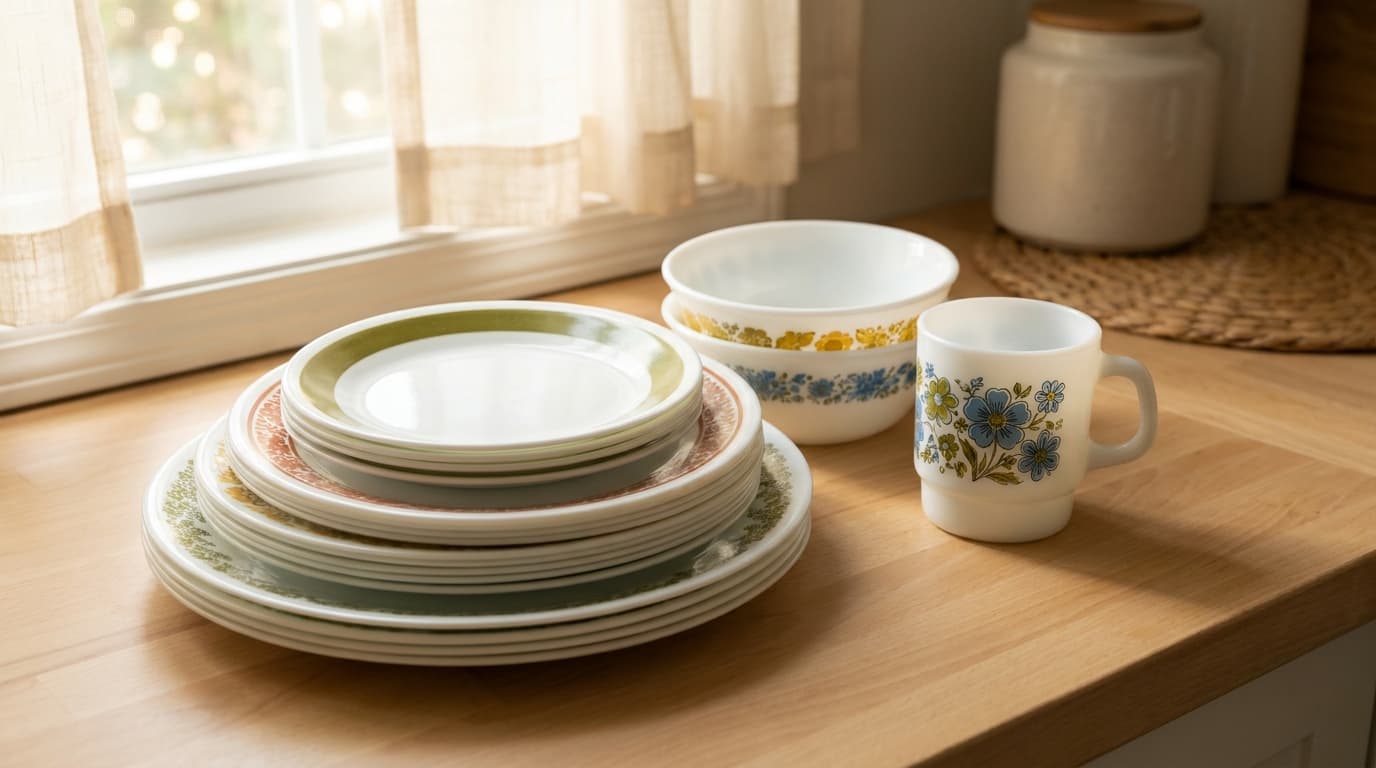
If you inherited a stack of lightweight white dishes with a familiar band of flowers around the rim, you may be holding collectible Corelle. The short answer to "which Corelle patterns are most valuable?" is this: the patterns that combine discontinuation, strong nostalgic demand, and scarcity of serving pieces — names like Snowflake Blue, Spring Blossom Green (often called Crazy Daisy), Butterfly Gold, and Old Town Blue come up again and again. This guide shows you how to identify the patterns collectors chase, how to date a set, and what actually drives one pattern's value above another.
Corelle isn't fine china — it's a tempered glass laminate (Vitrelle) introduced by Corning in 1970, prized for being nearly unbreakable. That mass-market, everyday nature is exactly why certain discontinued patterns now carry a nostalgic premium: millions of households used them daily, and survivors in good condition with complete serving sets are harder to find than you'd expect.
How to identify a Corelle pattern fast
Corelle is easy to recognize once you know the cues:
- The body: thin, glossy, bright-white tempered glass with a slightly translucent, almost glass-like rim when held to light. It's lighter than ceramic stoneware of the same size.
- The decoration: patterns sit as a printed band, usually around the rim or on one side, not hand-painted. Designs are crisp and repeat uniformly.
- The backstamp: flip a plate over. Corelle and Corning backstamps changed over the decades, and the wording and logo style help confirm both authenticity and rough age.
- The shapes: cups, mugs, and bowls evolved over time. Early-1970s pieces often used a coupe (rimless) plate and specific cup shapes that later changed.
For broader help reading marks across all tableware, see our guide to antique and vintage china patterns, which covers how backstamps, shapes, and decoration combine to pin down a maker and era.
The Corelle patterns collectors actually chase
Below are the patterns that consistently surface in collector demand. Pricing varies widely by piece type and condition, so figures are flagged for the owner to fill from real sold data.
Butterfly Gold (1970–1980s)
The quintessential harvest-gold pattern: stylized gold-and-orange flowers with green leaves, the visual signature of a 1970s kitchen. It was wildly popular, which cuts both ways — recognition and nostalgia are high, but production volume was enormous, so plates and bowls remain common and affordable. Value concentrates in the harder-to-find serving pieces: casserole dishes with matching lids, large platters, and coordinating accessories.
As of writing, Butterfly Gold pieces typically sell in the US$25–$100 range, with boxed sets reaching up to around US$95; individual common plates sit at the low end of that band, while the harder-to-find covered casseroles and serving pieces pull toward the top.
Spring Blossom Green / "Crazy Daisy" (1970s)
A ring of green daisy-like flowers, affectionately nicknamed "Crazy Daisy" by collectors. It has one of the most devoted followings of any Corelle pattern. Because it's discontinued and broadly recognized, complete sets and scarce serving pieces draw steady interest.
As of writing, single Spring Blossom Green / Crazy Daisy pieces typically sell for around US$5–$20, while complete sets fall in the US$50–$200 range depending on size and the serving pieces included.
Snowflake Blue (early 1970s)
One of Corelle's earliest patterns: delicate blue snowflake-style medallions on white. As a first-generation design, it's older than most and less commonly found intact, which gives it a scarcity edge. Early production cues (coupe plates, early backstamps) make it a favorite for collectors who want a genuinely vintage set.
As of writing, single Snowflake Blue pieces typically sell for around US$10–$25, with complete sets in the US$50–$150 range.
Old Town Blue (1970s–1980s)
A blue-on-white pattern with a classic, almost Delft-inspired floral border that reads more "traditional dinnerware" than mod. Its timeless look keeps demand steady, and like the others, completeness and serving pieces drive the premium.
As of writing, single Old Town Blue pieces typically sell for around US$5–$10, with complete sets in the US$40–$150 range; as with the other lines, the scarcer serving pieces such as platters and covered casseroles command the premium within that band.
Other patterns worth a second look
- Cornflower Blue (Blue Cornflower): shares its look with the matching Pyrex line, which broadens its appeal among crossover collectors. If you collect both, our guide to vintage Pyrex patterns worth money explains why coordinating glass and dinnerware sets often sell better together.
- Woodland Brown: earthy brown florals, very much of its era; modest individually but desirable in complete sets.
- Indian Summer, Meadow, and other discontinued florals: value tracks the same rules — discontinued status plus serving-piece scarcity.
What makes one Corelle pattern more valuable than another
Four factors do most of the work. None of them is age alone.
| Factor | Pushes value UP | Pushes value DOWN |
|---|---|---|
| Discontinuation | Pattern is no longer made; buyers must replace from the secondary market | Still in production or recently retired |
| Demand / nostalgia | Strong era recognition (1970s harvest kitchens); active collector following | Generic or short-lived design few people remember |
| Set completeness | Full service plus serving pieces, ideally boxed with paperwork | Mismatched odds and ends |
| Condition | Bright print, glossy rim, no scratches, no fading from dishwashers | Dull, scratched, faded, or chipped tempered glass |
A few practical notes that follow from this table:
- Serving pieces are the prize. Households kept dinner plates by the dozen but owned one casserole lid — so casserole lids, large platters, sugar-and-creamer sets, and serving bowls are the scarce, value-driving items in nearly every pattern.
- Dishwasher wear is the silent value-killer. Decades of cycles dull the print and fog the rim. Mint, lightly used pieces command a real premium over worn ones in the same pattern.
- Boxes and paperwork matter more than people expect. An original boxed set signals scarcity and storage care, and it appeals to collectors replacing exact childhood dishes.
This mirrors how value works across collectibles generally; for the full framework on demand, rarity, condition, and provenance, see how to value an antique.
How to date your Corelle
Since Corelle launched in 1970, every piece is comparatively young — but you can still place a set within a decade using layered clues:
- Pattern first. Most collectible patterns map to a known production window, so identifying the pattern usually gets you to the right decade immediately.
- Backstamp wording and logo. The exact text and logo styling on the underside changed over the years; compare yours to documented examples for the pattern.
- Cup and mug shape. Early-1970s cups differ from later ones; a coupe (rimless) plate generally signals earlier production.
- Box and paperwork style. Typography, model numbers, and graphic design on original packaging shift by era and help confirm a date.
If you're unsure whether a piece is genuinely "vintage" or just old, the same dating logic applies to other mass-market dinnerware — our breakdown of discontinued Mikasa china patterns walks through how backstamp changes and production windows let you date a set even when records are thin.
How Histora helps
If you've got a cupboard of unidentified dishes and no idea which pattern is which, snap a photo with Histora and the app gives you an instant first read on the pattern and likely era, plus the qualitative factors that affect value. Treat it as your starting point — confirm the pattern name, then check real completed-sale data and replacement-china listings before you price or sell. It's the fastest way to go from "box of random plates" to a named, dateable pattern you can research properly.
A quick word on using vintage Corelle
Some vintage Corelle — particularly heavily decorated and certain colored patterns from before modern standards — has tested positive for lead in the decorative glaze. Many collectors display these pieces rather than eat off them, especially when the print is worn. If you intend to use a vintage pattern for food, research that specific pattern and consider keeping decorated vintage pieces for display only.
The bottom line
The most valuable Corelle patterns aren't necessarily the oldest — they're the discontinued, well-remembered designs that survive in complete sets with their scarce serving pieces intact. Butterfly Gold rides nostalgia, Spring Blossom (Crazy Daisy) and Snowflake Blue ride scarcity and a devoted following, and Old Town Blue rides a timeless look. Identify the pattern, judge the set's completeness and condition honestly, date it with backstamps and shapes, then let real sold-listing data set the number. Do that, and you'll know whether your inherited dishes are everyday tableware or a quietly collectible set.
Frequently Asked Questions
Identify your antique instantly
Snap a photo with Histora to get an instant first estimate of your item's value, origin, and history — then dig deeper with the guides above.


Related Guides
- Item GuideAntique & Vintage China Patterns: How to Identify and Value (2026)Read guide
- Item GuideVintage Pyrex Patterns Worth Money (Value Guide 2026)Read guide
- Item GuideDiscontinued Mikasa China Patterns Worth Money (2026)Read guide
- ValuationHow to Value an Antique: 9 Ways to Find What It's Worth (2026)Read guide