How to Identify Dorothy Thorpe Glassware (2026)
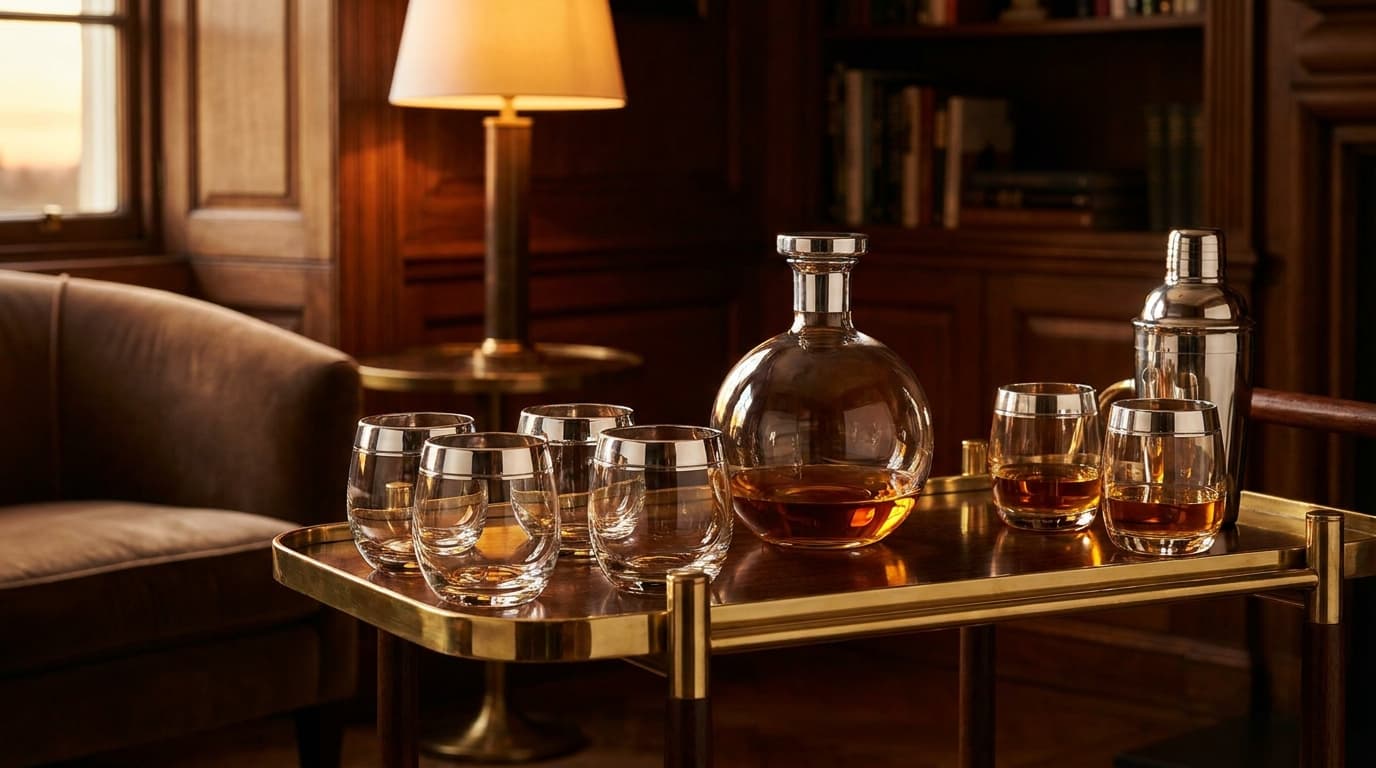
If you have inherited a set of clear glasses wrapped in a wide silver band, or spotted them at an estate sale, you may be holding Dorothy Thorpe glassware. The fastest way to identify it: look for a smooth, evenly applied silver overlay band on unmarked mid-century glass, often on short rounded "Roly Poly" tumblers. Because genuine pieces are almost never signed, identification is about reading the design and the quality of the band rather than hunting for a stamp.
This guide explains who Dorothy Thorpe was, how to recognize her signature silver-band and Roly Poly styles, the challenges of identifying unmarked pieces, and what makes a set desirable to today's collectors.
Who Was Dorothy Thorpe?
Dorothy Thorpe was an American designer active from the 1930s through the mid-century era, best known for decorative glass and barware. Rather than running a glass furnace, she worked as a decorator: she bought plain glass blanks from established glass manufacturers and applied her own finishes, etchings, and especially her silver overlay treatments.
This business model matters for identification. Because the underlying glass came from various suppliers, you cannot identify Dorothy Thorpe by the glass body alone. Two genuine pieces may sit on slightly different blanks. What ties her work together is the decoration she added on top, particularly the wide silver band that became her calling card.
Her designs caught the spirit of post-war American entertaining. The 1950s and 1960s were the golden age of the home cocktail hour, and her glamorous, modern barware fit perfectly on the bar carts of the era.
The Signature Silver-Band (Silver Overlay) Style
The single most recognizable Dorothy Thorpe design is the silver-band overlay. A broad ribbon of silver wraps the clear glass, usually around the rim or upper body, creating a striking contrast between the bright metallic band and the transparent glass below.
What to look for in a genuine silver band:
- Width and placement. The band is wide and bold, not a thin pinstripe. On many pieces it occupies a substantial portion of the upper glass.
- Smooth, integrated finish. Authentic silver overlay has a polished, slightly mirror-like surface that feels part of the glass, not a sticker or a painted stripe sitting on top.
- Even application. The band should be consistent in width and tone all the way around, without obvious brush marks or a grainy painted texture.
- Age-appropriate wear. Real silver tarnishes and can show gentle wear at high-contact points. Some honest aging is expected; heavy flaking or a finish that rubs off is a red flag.
The silver-band look was applied across a range of forms: tumblers, highball glasses, pitchers, salad bowls, chargers, and serving pieces. A matched set with consistent banding is more desirable than a group of mismatched survivors.
The Roly Poly Style
The other shape collectors immediately associate with Dorothy Thorpe is the Roly Poly glass. These are short, rounded, stemless tumblers with no foot. They sit low to the table, have a generous curved body, and feel pleasantly heavy in the hand.
Paired with the silver band, the Roly Poly became an icon of mid-century barware. The combination of the rounded form and the gleaming silver rim is exactly the image most people summon when they picture this glassware. If you have low, curvy, bandless-or-banded tumblers from this period, the Roly Poly silhouette is one of your strongest identification clues.
Beyond Roly Poly, you may encounter taller highball and old-fashioned shapes with the same banding treatment, as well as larger hostess pieces like bowls and trays.
Why Identification Is Tricky: The Lack of Marks
Here is the core challenge: most Dorothy Thorpe glassware is unmarked. Because she decorated blanks rather than manufacturing glass, there was rarely a molded-in maker's mark to identify her, and any paper labels or applied signatures have usually long since worn away or washed off.
That means you generally cannot confirm a piece by flipping it over and finding "Dorothy Thorpe" stamped on the base. Instead, identification leans on converging clues:
- Band quality — the smooth, wide, well-applied silver overlay described above.
- Shape — Roly Poly and other recognizable mid-century barware forms.
- Mid-century context — consistent with 1950s-60s American entertaining ware.
- Set consistency — matching glasses, pitchers, and serving pieces decorated the same way.
Because no single feature is a smoking gun, careful comparison against documented genuine examples is the safest approach. The same lack of marks affects many maker-decorated pieces, which is part of why learning to identify an antique from a photo by its design details is such a useful skill.
This is also where a quick first read can save time. Histora's AI antique identifier can give you an instant first estimate of style, era, and likely maker from a photo, which is a helpful starting point for unmarked barware before you do deeper hands-on verification. Treat it as the first step, not the final word.
Genuine vs. Reproduction: Reading the Band
Because the silver-band look has been widely imitated, telling a genuine vintage piece from a later reproduction or a similar-but-not-Thorpe item comes down to the band and the glass:
| Feature | Genuine vintage overlay | Reproduction / imitation red flags |
|---|---|---|
| Band surface | Smooth, polished, slightly mirror-like | Grainy, matte, or obviously painted |
| Durability | Holds up; wears gently with age | Flakes, peels, or rubs off easily |
| Band edges | Clean, even, integrated into glass | Ragged, uneven, or visibly raised paint |
| Glass weight | Substantial, quality mid-century blanks | Thin, light, modern-feeling glass |
| Tarnish behavior | Real silver can tarnish/patina | Never tarnishes (non-silver coating) |
No single test is definitive, especially since genuine pieces vary. But a band that flakes off or feels like spray paint is a strong sign you are not looking at quality vintage silver overlay.
The Mad Men Effect and Mid-Century Desirability
Dorothy Thorpe barware enjoyed a major revival thanks to renewed interest in mid-century cocktail culture, amplified by the television series Mad Men. The show's glamorous, period-accurate bar scenes sent decorators and collectors hunting for authentic silver-band glasses to recreate that look at home.
That cultural pull keeps demand alive. Buyers want the genuine period aesthetic: the gleam of real silver overlay, the satisfying heft of a Roly Poly tumbler, and the unmistakable 1950s-60s mood. Clean, complete sets photograph beautifully and slot straight into mid-century-modern interiors, which is a meaningful part of why they remain sought after.
What Drives Value
You can assess relative desirability without quoting prices. The factors that push a Dorothy Thorpe piece up or down are the same forces that drive most collectible glass, covered in depth in our guide on how to value an antique:
- Condition of the band. This is paramount. A bright, intact, evenly applied silver band is worth far more than a worn, flaking, or partially missing one. Damage here is hard to reverse.
- Completeness of the set. Matched sets — multiple tumblers plus a pitcher, or a full barware grouping — are more desirable than singles.
- Form and rarity. Iconic Roly Poly tumblers and harder-to-find serving pieces (large bowls, chargers, pitchers) draw more attention than common shapes.
- Glass condition. Chips, cracks, cloudiness, or dishwasher etching on the clear glass reduce desirability even when the band survives.
- Provenance and presentation. Original packaging, documentation, or a credible estate history adds confidence, especially given the absence of maker's marks.
Silver-band barware is a recurring favorite in roundups of the most valuable antiques to look for precisely because the look is instantly recognizable and the genuine, well-kept examples are getting harder to find in excellent shape.
For concrete figures, real sold data is the only reliable source:
- A single genuine silver-rim Roly Poly tumbler in good condition: as of writing, a typical eBay sold range is about US$15–$35.
- A complete silver-band barware set (e.g., a set of four to eight tumblers): as of writing, these typically sell in the US$80–$200 range.
- Larger serving pieces such as silver-band punch bowls or pitchers carry a clear premium over tumblers — as of writing, these typically sell for around US$100–$400.
Caring for Dorothy Thorpe Glassware
Because the silver overlay is the most valuable and most vulnerable part, care directly affects long-term value. Never put these pieces in the dishwasher — heat, abrasion, and harsh detergent strip the silver band quickly. Hand-wash gently with mild soap, avoid abrasive cloths and scrubbers, and dry softly. Storing glasses so the bands do not grind against each other helps preserve the finish. The fact that so many sets were ruined in dishwashers is exactly why clean survivors stand out.
Quick Identification Checklist
- Wide, smooth silver overlay band on clear glass
- Band is durable and integrated, not painted-on or flaking
- Short, rounded, footless Roly Poly tumblers (or matching mid-century shapes)
- Substantial, quality glass blanks
- Usually no maker's mark — identify by design, not signature
- Consistent decoration across a matched set
- Honest, age-appropriate wear rather than modern spray-coating
Dorothy Thorpe's silver-band glassware remains one of the most recognizable looks in mid-century barware. Once you learn to read the band quality, the Roly Poly silhouette, and the mid-century context, you can identify genuine pieces with confidence even though they almost never carry a name.
Frequently Asked Questions
Identify your antique instantly
Snap a photo with Histora to get an instant first estimate of your item's value, origin, and history — then dig deeper with the guides above.